
Whoa!
I noticed something odd last week when I was tracing a token swap.
The transaction ID led me down a rabbit hole of accounts, inner instructions, and memos that didn’t make sense at first glance.
Initially I thought the explorer was broken, but then I realized my tooling choice was the issue — not the chain.
My instinct said: dig deeper, and bring better tools along.
Wow!
Blockchain explorers feel boring until they save you from a $20,000 mistake.
Seriously? Yes.
One wrong SPL token mint and suddenly you’re staring at a page with cryptic balances and no context — that’s terrifying if you move fast.
I’m biased, but having a clear UI and good analytics matters more than people admit.
Here’s the thing.
Solana’s speed is amazing and maddening at the same time.
Blocks and confirmations fly by, and that velocity can hide failures and edge cases.
On one hand it’s beautiful — low fees, instant swaps — though actually that speed makes forensic work harder; on the other hand, you need explorers that make a messy ledger feel legible.
Something felt off about explorers a few years ago, but they’ve matured a lot since then.
Whoa!
I use multiple explorers when I’m sleuthing, not just one.
Having redundant views prevents misreadings and catches inconsistencies.
Initially I thought a single “official” explorer would be enough, but redundancy uncovered missing inner instructions more than once.
I’ll be honest: that redundancy has saved me more than a few sleepless nights.
Wow!
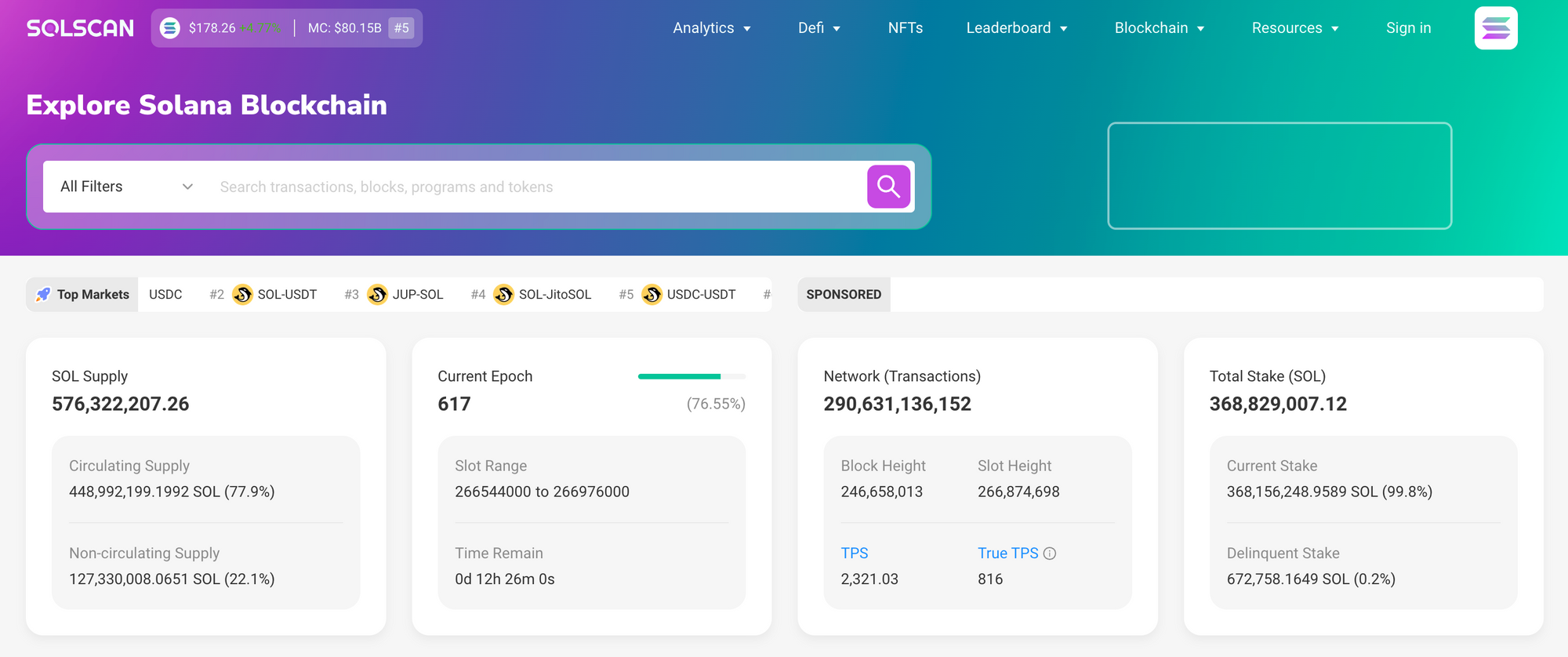
Check this out—if you want a rapid lookup with clear token pages, transaction decoding, and program traces, the solscan explorer often shows up in my workflow.
It surfaces inner instruction details, parsed program logs, and token transfers in ways that make sense to engineers and product folks alike.
I don’t mean to sound like an ad; I’m just pointing to practical outcomes: faster debugging, fewer wrong transfers, clearer audit trails.
(Oh, and by the way… the UI is refreshingly snappy.)
How I Use Explorers in Real Workflows
Whoa!
First, quick sanity checks.
I look at slot, timestamp, fee payer, and top-level success or failure.
Then I dive into inner instructions and parsed logs to figure out what the program actually did, which can be surprisingly different from what the frontend promised.
My approach evolved: simple checks first, deeper forensic reads second, and then cross-checks between explorers to triangulate the truth.
Wow!
For projects I consult on, I create a checklist: read memos, confirm associated token accounts, verify rent exemptions, and look for partial failed CPI calls.
These are the signals that tell you if a swap was roughed up by a slippage issue or if a program silently returned an error.
Initially I missed probing inner instructions, which led to wrong assumptions; now that feels like amateur hour.
Seriously, taking the extra minute to inspect inner calls saves grief — very very important.
Whoa!
Analytics matter too.
I care about historical trends: program fees, average instruction counts, and failed transaction rates.
Understanding the baseline behavior of a program or validator cluster helps differentiate normal variance from anomalies that deserve alerts.
On that note, Solana analytics tools have gaps, but pairing a good explorer with analytics dashboards gives you both detail and context — that’s the sweet spot.
Wow!
I like explorers that make token pages useful.
A token page should list holders, supply changes, major transfers, and mint authority actions in a way you can skim.
I’m not 100% sure which metric is most predictive of rug risks, though holder concentration is a helpful signal.
On one hand high concentration might be fine; on the other hand it’s a red flag if big wallets start moving around before an upgrade or migration.
Whoa!
Program pages need clarity.
A clean view of program versions, associated accounts, and upgrade authorities prevents surprises during audits or upgrades.
Initially I thought program accounts were static, but I’ve watched upgradeable loaders and proxy patterns evolve and cause confusion.
Actually, wait—let me rephrase that: they aren’t static in practice, and understanding upgrade paths is part of responsible ops.
Wow!
Searchability is underrated.
Being able to find transactions by signer, memo, or token mint — fast — changes the speed of incident response.
If I’m triaging a support ticket and can locate the exact transfer in 30 seconds, the user feels heard and the engineering on-call can breathe.
My gut says explorers that prioritize findability are underrated, and that matters more in prod than in theory.
Whoa!
I should mention the learning curve.
Explorers are both docs and tools for newer devs.
Good explorers teach: well-labeled instruction names, helpful tooltips, and example flows reduce mistakes.
I teach juniors to use explorers before they deploy anything critical; seeing decoded instructions makes abstract transactions concrete.
This part really bugs me when interfaces obfuscate instead of explain.
Wow!
Security folks will like this — transparency helps.
A detailed explorer makes it easier to write forensic reports, track misbehaving contracts, and produce evidence for exchanges or legal requests.
On one assignment, we traced a chain of accounts to find a compromised key, and the explorer’s transaction graph accelerated the investigation.
I’m not claiming exclusivity; many tools helped, though that particular explorer offered the right combination of graphs and raw logs to close the case.
FAQ
Which explorer should I trust for Solana analytics?
Trust depends on what you need. For interactive, transaction-level detail and straightforward token pages I reach for the solscan explorer because it balances parsed logs, holder data, and a snappy interface.
That said, it’s wise to cross-check with other explorers and analytics dashboards to avoid single-source errors — personally I always double-check critical transfers.
Can explorers help prevent mistakes?
Yes. By inspecting inner instructions, associated token accounts, and program logs before confirming a transaction, you reduce the risk of sending tokens to the wrong place or miscalling a CPI.
If you’re moving significant amounts, take the extra minute to confirm addresses and inspect the decoded instruction sequence.
I’m biased toward caution, but that conservative habit has paid off.
What should product teams prioritize when designing an explorer?
Make the complex legible.
Prioritize parsed instruction names, searchable memos, and clear token/holder lists.
Also, provide context for non-engineers — tooltips and examples go a long way.
And please, invest in speed and reliability; nothing kills confidence like timeouts during incident response.
Wow!
If you care about clear audits, quick triage, and learning from on-chain behavior, a strong explorer becomes part of your toolbelt.
My instinct said that explorers would stay niche, but they’ve become central to both devops and product support.
On one hand, there’s lots of shiny analytics, though actually the daily value comes from being able to answer “what exactly happened” in plain terms.
Check this out—if you want to try one I recommend starting with a practical page like a token mint or transaction trace on the solscan explorer, and play with the parsed logs until the ledger starts to tell a story.
I’m not perfect; I still miss things sometimes, but better explorers make me a lot less nervous about deploying and moving funds.
